Experiencing pain at the back of your mouth? Wisdom tooth pain is a common dental problem, especially when the third molars do not have enough space to erupt properly. At Parekh Dental Care, Mulund, Mumbai, we help patients understand the cause of wisdom tooth pain and explore appropriate treatment options for lasting relief.
Whether you are experiencing swollen gums, jaw pain, difficulty opening your mouth, or discomfort while chewing, knowing how to manage wisdom tooth pain can help you feel more comfortable until you receive professional dental care.
🦷 Common Causes of Wisdom Tooth Pain
Impacted wisdom teeth: The tooth remains trapped under the gum or bone due to insufficient space.
Partially erupted wisdom teeth: Food and bacteria collect around the gum flap, causing inflammation and infection, known as pericoronitis.
Wisdom tooth decay: Difficult-to-clean back teeth are more prone to cavities.
Gum infection or swelling: Inflamed gums around an erupting wisdom tooth can cause tenderness and discomfort.
Pressure on surrounding tissues: An improperly positioned wisdom tooth may cause pain in the jaw or nearby teeth.
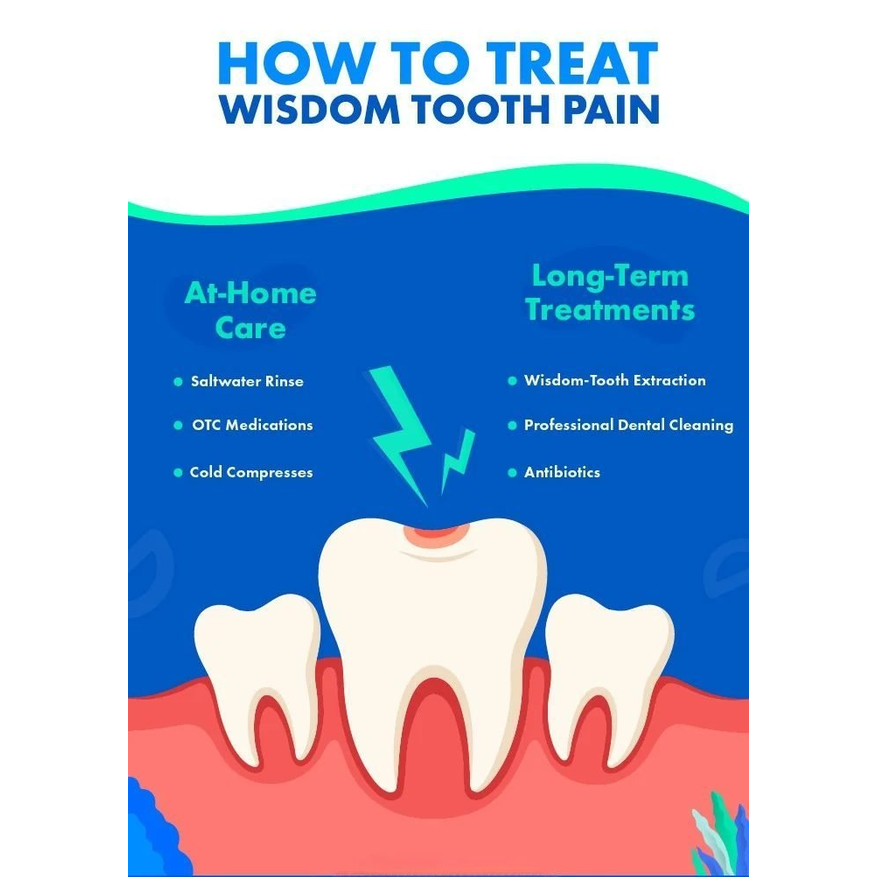
🏠 At-Home Care for Wisdom Tooth Pain
These measures may provide temporary relief, but they do not eliminate the underlying cause.
1. Warm Saltwater Rinse
Dissolve half a teaspoon of salt in a glass of warm water. Gently rinse your mouth and spit it out. This may help soothe irritated gums and wash away food debris around the wisdom tooth.
2. Over-the-Counter (OTC) Pain Relief
Pain-relieving medicines such as paracetamol or ibuprofen may help manage dental pain when used according to the label and your dentist’s advice. Ibuprofen is not suitable for everyone, particularly some people with stomach ulcers, kidney problems, or those taking certain medications. Ask a pharmacist or dentist if you are unsure.
Never place aspirin directly on the tooth or gums, as it can cause a chemical burn.
3. Cold Compress
Apply a cold pack wrapped in a towel to the outside of your cheek for 15–20 minutes at a time. This may help reduce swelling and numb discomfort. Avoid placing ice directly on the skin.
4. Maintain Gentle Oral Hygiene
Brush carefully around the affected area using a soft-bristled toothbrush. Keep the area clean without injuring the swollen gums. Choose soft foods and avoid very hot, hard, or spicy foods if they aggravate the pain.
Important: Home remedies are temporary measures. Persistent or recurring wisdom tooth pain requires a dental examination.
🦷 Long-Term Treatment for Wisdom Tooth Pain
The right treatment depends on the position of the wisdom tooth, the severity of inflammation, and whether decay or infection is present.
1. Wisdom Tooth Extraction
Wisdom tooth removal may be recommended if the tooth is impacted, repeatedly infected, severely decayed, or causing damage to adjacent teeth. The dentist will examine the area and may recommend an X-ray to assess the tooth's position and roots before deciding whether extraction is necessary.
Not every wisdom tooth needs removal. Healthy wisdom teeth that erupt properly and can be kept clean may simply require monitoring.
2. Professional Dental Cleaning and Irrigation
If the gum around a partially erupted wisdom tooth is inflamed, professional cleaning and irrigation may help remove trapped food and bacteria. Your dentist will assess whether additional treatment is needed to prevent recurrence.
3. Antibiotics — Only When Indicated
Antibiotics are not routinely required for wisdom tooth pain. They may be prescribed when there is evidence of spreading infection or other specific clinical indications. They cannot correct an impacted tooth or replace necessary dental treatment.
Do not take leftover antibiotics or self-medicate. Treating the underlying dental cause is essential.
⚠️ When Should You See a Dentist?
Arrange a dental appointment if you experience:
Persistent or worsening pain at the back of your mouth.
Swollen, red, or bleeding gums around a wisdom tooth.
Bad breath or an unpleasant taste associated with the affected area.
Difficulty chewing or opening your mouth.
Repeated episodes of wisdom tooth infection.
Seek urgent dental or medical care if you develop facial or neck swelling, fever with worsening symptoms, or difficulty opening your mouth. Difficulty breathing or swallowing, or rapidly spreading swelling, requires emergency care.
🌟 Wisdom Tooth Pain Relief at Parekh Dental Care, Mulund
At Parekh Dental Care, Mulund, Mumbai, Dr. Hetal Parekh focuses on identifying the cause of dental pain and recommending appropriate treatment based on your individual needs. From assessing impacted wisdom teeth to managing gum inflammation and discussing wisdom tooth extraction when necessary, the aim is to support your oral health with suitable, patient-focused dental care.
If you are searching for a dentist for wisdom tooth pain in Mulund, wisdom tooth infection treatment, or wisdom tooth removal near Mulund West, a timely dental consultation can help prevent complications.
📍 Visit: Parekh Dental Care, Mulund, Mumbai
📞 Call for an appointment: 9833423232
Don't ignore wisdom tooth pain. Get the cause checked and take the right step towards a healthier, more comfortable smile!
Frequently Asked Questions (FAQs)
1. How can I relieve wisdom tooth pain at home?
Warm saltwater rinses, a cold compress, gentle brushing, soft foods, and suitable over-the-counter pain relief may provide temporary comfort. Consult a dentist if pain persists or worsens.
2. How long does wisdom tooth pain last?
Mild discomfort during eruption may settle, but pain caused by impaction, decay, or infection can persist or recur until the underlying problem is treated.
3. Do all painful wisdom teeth need extraction?
No. Extraction depends on the tooth's position, health, symptoms, and risk of complications. A dentist can assess whether monitoring or treatment is appropriate.
4. Can antibiotics cure wisdom tooth pain?
Antibiotics alone do not resolve impaction or tooth decay. They are used only when clinically indicated, alongside appropriate dental treatment.
5. When should I get my wisdom tooth checked?
Seek an examination for persistent pain, swollen gums, repeated infection, or difficulty chewing. Seek urgent care for facial swelling, fever with worsening symptoms, or difficulty swallowing or breathing.
Keywords