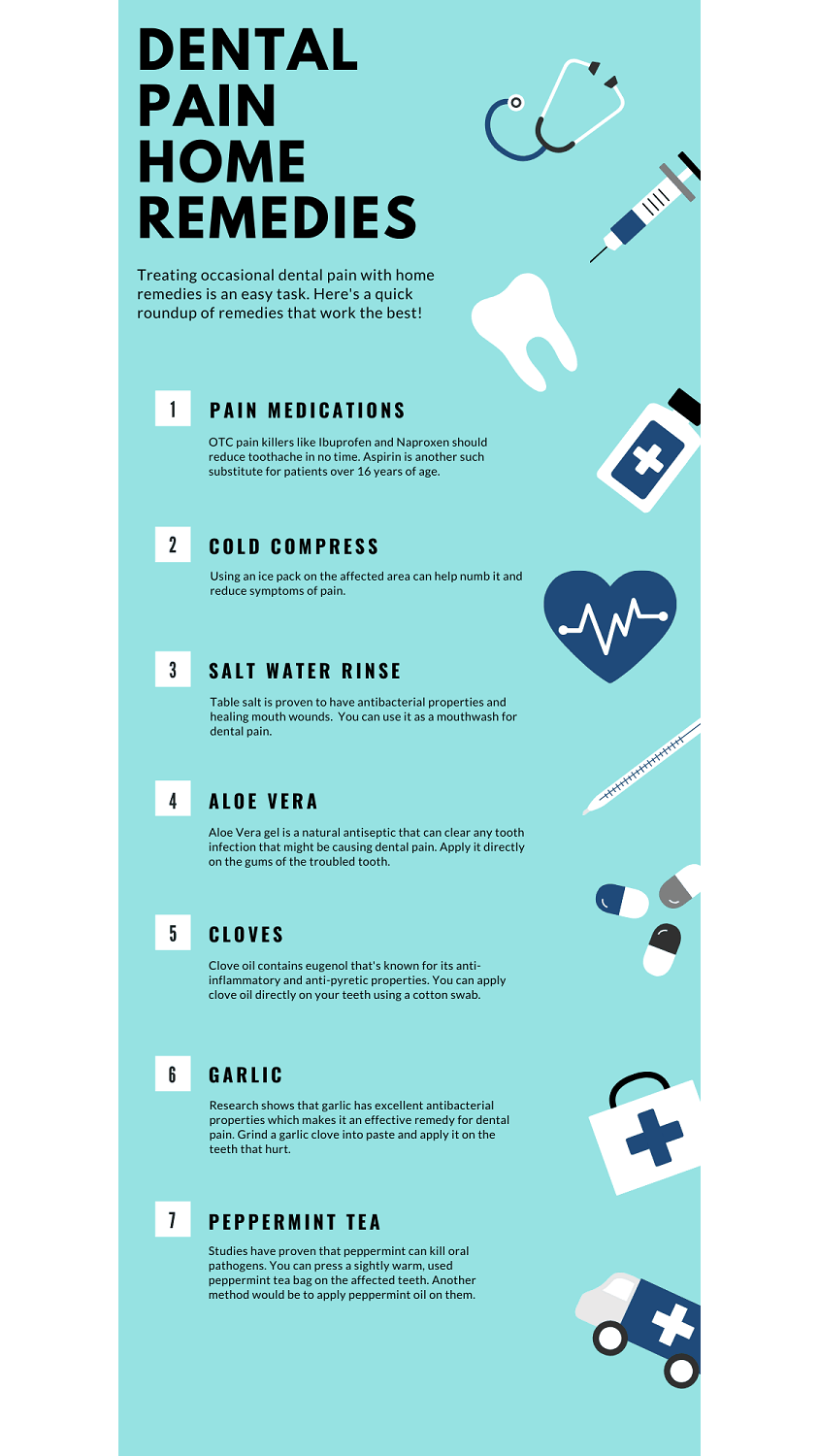
A sudden toothache or dental pain can be uncomfortable, especially when you cannot visit a dentist immediately. Some simple home measures may provide temporary relief from tooth pain, but it is important to remember that home remedies usually do not treat the underlying cause of a dental problem.
Tooth pain may be caused by tooth decay, dental infection, gum disease, a cracked tooth, tooth sensitivity, or an impacted tooth. If the pain continues, a dental examination is recommended.
Here are some commonly used home remedies for dental pain and toothache relief:
1. Pain Medications
Over-the-counter pain relievers such as ibuprofen or paracetamol (acetaminophen) may help reduce dental pain when they are safe for you to take. Always follow the recommended dosage and consider your medical conditions or other medicines.
Important: Do not place aspirin directly on the tooth or gums, as it can irritate or burn the tissues. Children should not be given aspirin unless specifically advised by a healthcare professional.
2. Cold Compress
A cold compress for toothache can help reduce discomfort and swelling. Wrap an ice pack in a cloth and apply it to the outside of the cheek near the painful tooth for short intervals.
This can be particularly useful when dental pain is accompanied by swelling.
3. Salt Water Rinse
A warm salt water rinse for tooth pain is a simple home-care measure that may help keep the mouth clean and soothe irritated gums.
Mix salt in warm water, gently rinse your mouth and spit it out. Do not swallow the solution.
4. Aloe Vera
Aloe vera is sometimes used for soothing irritated oral tissues. However, it should not be considered a treatment for a dental infection, cavity or abscess. Avoid applying unverified products directly to an open wound or infected area.
If tooth pain is persistent, seeing a dentist is safer than relying on home remedies.
5. Cloves
Clove oil for toothache is a traditional home remedy because clove contains eugenol, a compound with analgesic and antimicrobial properties.
However, concentrated clove oil can irritate or damage the gums if used incorrectly. It should not replace professional dental treatment.
6. Garlic
Garlic has antimicrobial properties and is sometimes suggested as a natural remedy for tooth pain. However, applying raw garlic directly to the tooth or gums may cause irritation or a chemical burn.
For this reason, it is better not to rely on garlic as a treatment for severe dental pain.
7. Peppermint Tea
A cooled peppermint tea bag may provide a soothing sensation for irritated gums. However, peppermint tea is not a treatment for tooth decay, dental infection or an abscess.
If your toothache keeps returning, the cause needs to be identified by a dentist.
🚨 When Should You See a Dentist for Tooth Pain?
Home remedies can provide temporary toothache relief, but persistent dental pain should not be ignored. Visit a dentist if you have:
Tooth pain lasting more than a day or two
Facial or gum swelling
Severe or throbbing toothache
Pain while biting or chewing
Sensitivity that persists after eating or drinking
Pus or a bad taste in the mouth
Fever along with dental pain
A broken or cracked tooth
Difficulty breathing or swallowing, or rapidly increasing facial/neck swelling, requires urgent medical attention.
🦷 Get the Cause of Your Toothache Checked
Whether your pain is due to a cavity, tooth infection, gum problem, wisdom tooth, cracked tooth or sensitivity, identifying the cause is the key to proper treatment. Home remedies may help you manage discomfort temporarily, but they cannot repair a decayed or infected tooth.
For tooth pain treatment in Mulund, consult Dr. Hetal Parekh at Parekh Dental Care, Mulund for an appropriate dental examination and treatment plan.
Keywords